


VR in psychotherapy has moved far beyond gaming. Today, virtual reality helps people explore safe, immersive environments that support calm, growth and healing. Instead of only talking about a difficult situation, a person can practise facing it, step by step, in a space that feels real but stays under control.
In this article, we look at why immersion works, how Eternilink uses it, and what to keep in mind before you try it.
Why VR in psychotherapy works
Virtual reality creates a strong sense of presence: the feeling of actually being somewhere else. As a result, the body and mind respond to a virtual scene in a way that resembles real life. Clinicians have used this effect for years, especially in exposure-based approaches. For instance, the American Psychological Association lists exposure-based therapies among its recommended treatments for PTSD.
VR makes that kind of practice easier to organise. A therapist can adjust a scene in seconds, repeat it as often as needed and stop it at any moment.
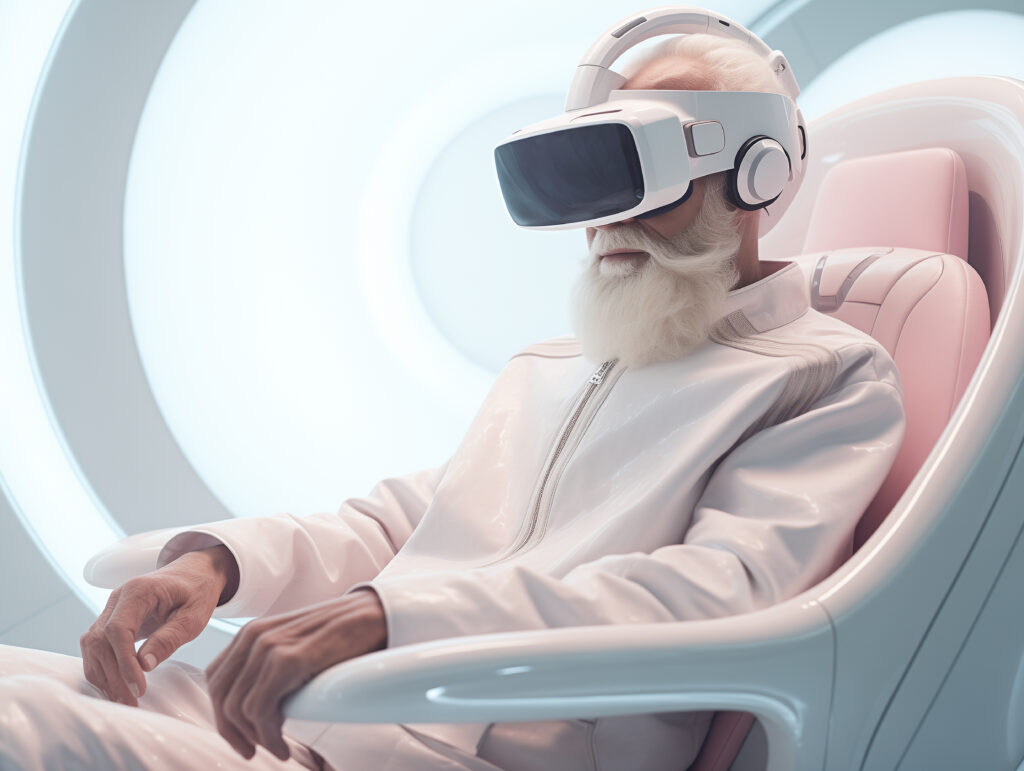
Therapy, wherever you are
Whether you need calm, cognitive reconditioning or gradual exposure, Eternilink’s immersive VR sessions take place in realistic spaces: a beach, a forest or a cosy office. Moreover, these environments adapt in real time to how you feel, so the session follows your pace instead of a fixed script.
AI-driven environments
You do not need to choose your space manually. Instead, the AI recommends or adjusts the environment based on your emotional state. To do this, it uses signals such as your voice tone or stress level, always with your consent. For example, if your stress rises, the scene can slow down, soften its light or guide you back to your breathing.
Using VR in psychotherapy safely
- You stay in control. You can pause or leave a session at any time.
- Short sessions first. Starting with a few minutes reduces fatigue and motion sickness.
- Professional guidance. Anything that involves facing fears should be led by a qualified therapist.
- Not for everyone. People prone to seizures or severe motion sickness should ask a healthcare professional first.
If you want to see what a full session of VR in psychotherapy looks like, read our step-by-step guide: Inside a VR Therapy Session.
VR in therapy is no longer a luxury. It is becoming a practical tool: deeply personal, powerfully immersive and guided by AI.
Where this is heading
Eternilink’s adaptable VR spaces offer a preview of where psychotherapy is going. Still, technology only works when it supports the human relationship at the heart of therapy. That is why our sessions are designed to fit alongside professional care. Discover our features, or join the waitlist to try a session when access opens.
Eternilink is a wellness support tool and does not provide medical diagnosis or treatment. If you are in crisis or think you may be in danger, contact your local emergency number immediately.